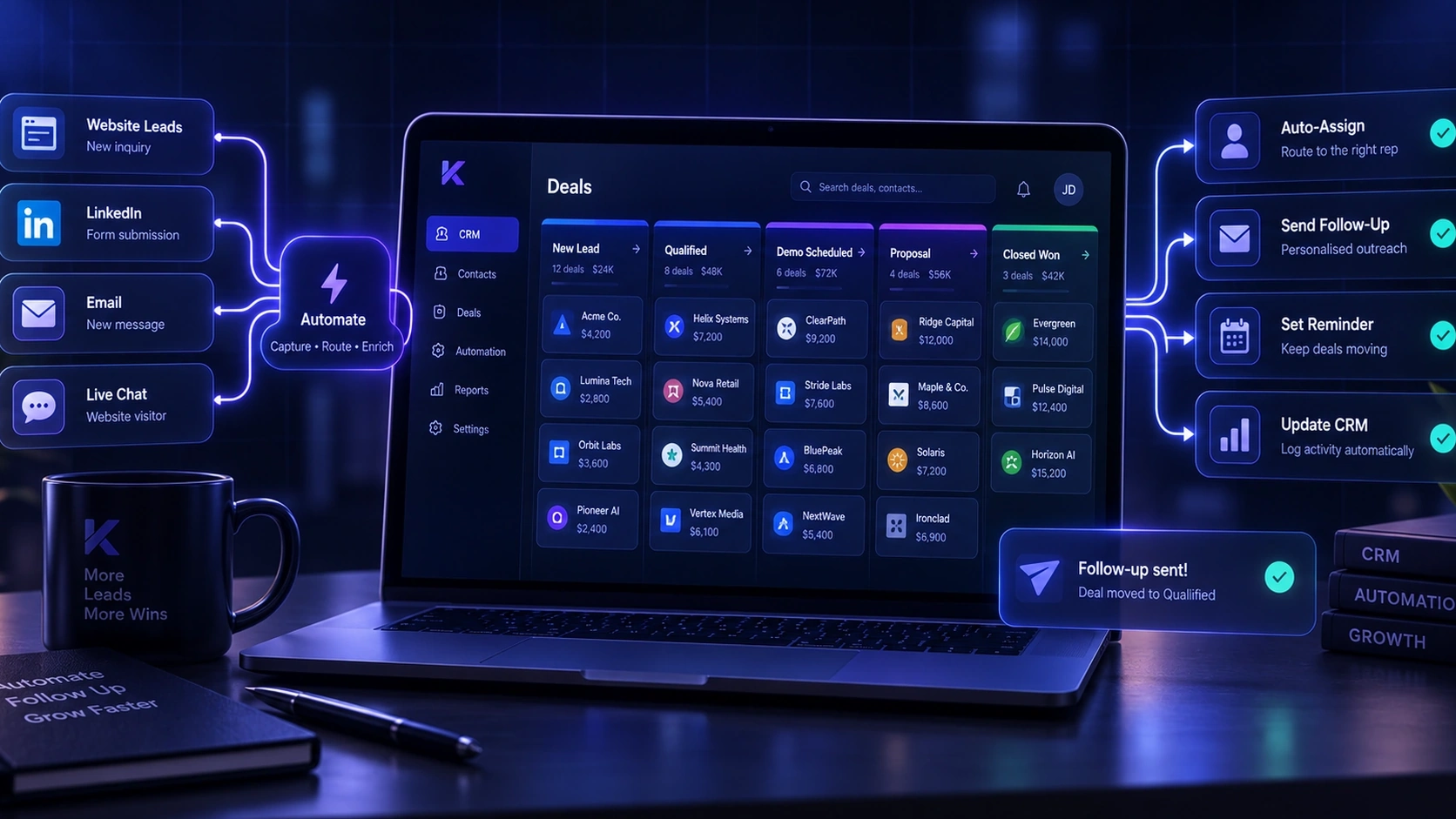
The best CRM for a small business is not the one with the most features. It is the one the team will actually keep accurate.
A small-business CRM should provide one dependable view of contacts, opportunities, ownership, next actions and source data without creating more administration than it removes. When evaluating cRM for Small Business, focus on the process, measurement and handoffs before choosing software or adding another tool.
What crm for small business actually means
A small-business CRM should provide one dependable view of contacts, opportunities, ownership, next actions and source data without creating more administration than it removes. The scope of cRM for Small Business should be tied to a specific customer journey and commercial outcome rather than a generic list of activities.
Related concepts such as CRM for small business, sales pipeline, CRM automation and lead tracking are useful only when they support the same operating model. A long service list is not the same thing as a connected system.
Why this matters commercially
1. Inbox-based selling hides opportunity status
Inbox-based selling hides opportunity status can create downstream friction when ownership, data and follow-up are not connected. Test the cRM for Small Business handoff in the live customer journey and measure whether it improves speed, clarity or qualified progression.
2. Spreadsheets make ownership and follow-up fragile
Spreadsheets make ownership and follow-up fragile can create downstream friction when ownership, data and follow-up are not connected. Test the cRM for Small Business handoff in the live customer journey and measure whether it improves speed, clarity or qualified progression.
3. Marketing cannot learn when lead outcomes are invisible
Marketing cannot learn when lead outcomes are invisible can create downstream friction when ownership, data and follow-up are not connected. Test the cRM for Small Business handoff in the live customer journey and measure whether it improves speed, clarity or qualified progression.
A practical framework you can use
- Define the sales stages first. For cRM for Small Business, assign ownership, define the evidence required at this step and decide in advance what signal will trigger the next action.
- Keep required fields minimal. For cRM for Small Business, assign ownership, define the evidence required at this step and decide in advance what signal will trigger the next action.
- Make ownership explicit. For cRM for Small Business, assign ownership, define the evidence required at this step and decide in advance what signal will trigger the next action.
- Add source tracking and basic automation. For cRM for Small Business, assign ownership, define the evidence required at this step and decide in advance what signal will trigger the next action.
- Build one useful pipeline report before ten dashboards. For cRM for Small Business, assign ownership, define the evidence required at this step and decide in advance what signal will trigger the next action.
The framework is deliberately simple. CRM for Small Business becomes difficult when complexity is added before ownership, baseline data and measurement are clear.
Common mistakes to avoid
- Migrating bad data without cleanup. In cRM for Small Business, that mistake can hide the real constraint and make later reporting or decision-making less trustworthy.
- Customising every field on day one. In cRM for Small Business, that mistake can hide the real constraint and make later reporting or decision-making less trustworthy.
- Buying enterprise complexity for a simple process. In cRM for Small Business, that mistake can hide the real constraint and make later reporting or decision-making less trustworthy.
- Letting each salesperson invent stages. In cRM for Small Business, that mistake can hide the real constraint and make later reporting or decision-making less trustworthy.
For cRM for Small Business, every change should improve the customer experience, an internal decision or the quality of the measurement signal. If a proposed cRM for Small Business change improves none of those outcomes, it should not be prioritised in the first version.
What to measure
Measurement for cRM for Small Business should reflect the job the system is expected to perform, not a generic reporting template. Useful signals for this topic include:
- CRM adoption
- data completeness
- unowned opportunities
- time in stage
- follow-up compliance
Do not expect one metric to tell the whole story. For cRM for Small Business, a lower cost per lead is not an improvement if qualification or sales progression deteriorates. In cRM for Small Business, a slightly slower path can still be valuable when it filters poor-fit demand and improves sales efficiency.
Where to go next
If cRM for Small Business is an active priority, map the current journey and baseline before buying another tool or launching another campaign. For cRM for Small Business, document where data disappears, customers wait or become confused, and where the sales team loses confidence in the information. That map usually tells you what to fix first.
Want a second set of eyes on the system?
Kavonis can review the website, target market and current acquisition constraint to decide whether cRM for Small Business is the right next move.
Request a Free Growth Assessment ↗